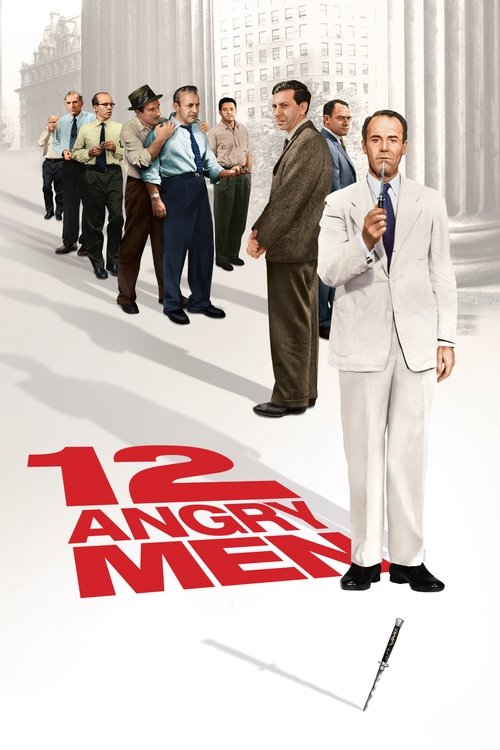
12 Angry Men
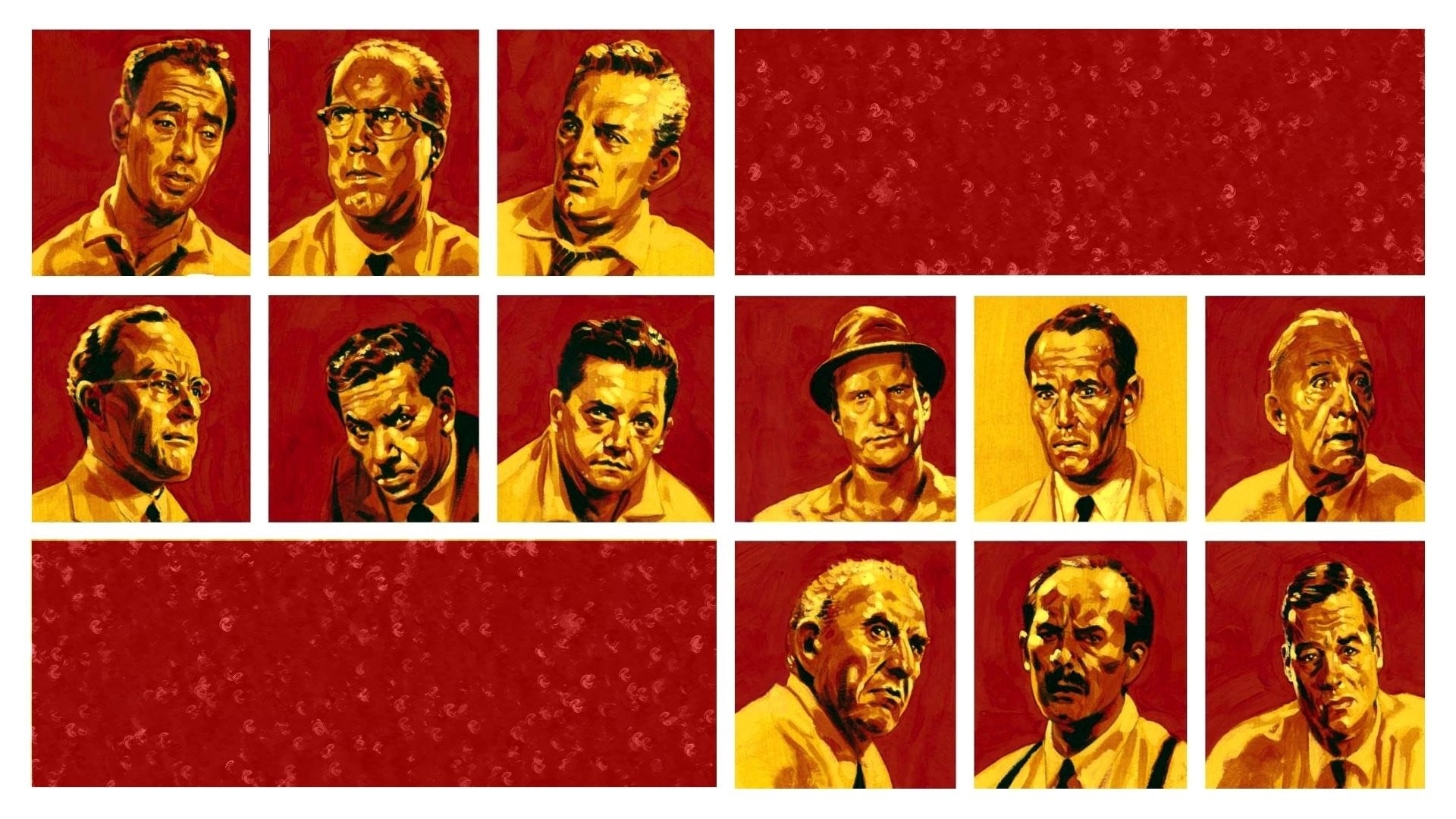
The defense and the prosecution have rested and the jury is filing into the jury room to decide if a young Spanish-American is guilty or innocent of murdering his father. What begins as an open and shut case soon becomes a mini-drama of each of the jurors’ prejudices and preconceptions about the trial, the accused, and each other.
Where to watch


DORAMAQUEST.COM Review
Sidney Lumet’s 1957 masterpiece, *12 Angry Men*, is a masterclass in claustrophobic tension and the slow, agonizing dissection of prejudice. This isn't merely a courtroom drama; it's a profound examination of human nature under pressure, a theatrical exercise in moral wrestling that remains as potent today as it was over six decades ago. Lumet, with surgical precision, transforms a single, sweltering jury room into a crucible where justice is forged, or perhaps, simply stumbled upon.
The genius here lies in its narrative structure and Lumet's unwavering directorial hand. Confined to one set for almost the entire 97 minutes, the film denies us the typical cinematic breadth, forcing our focus inward, onto the faces and the words. This deliberate limitation is its greatest strength. Boris Kaufman’s cinematography, initially wide and observational, gradually tightens, employing more close-ups and lower angles as the temperature rises, both literally and metaphorically. This subtle shift mirrors the escalating tension and the increasing scrutiny each juror faces, effectively trapping the audience alongside them.
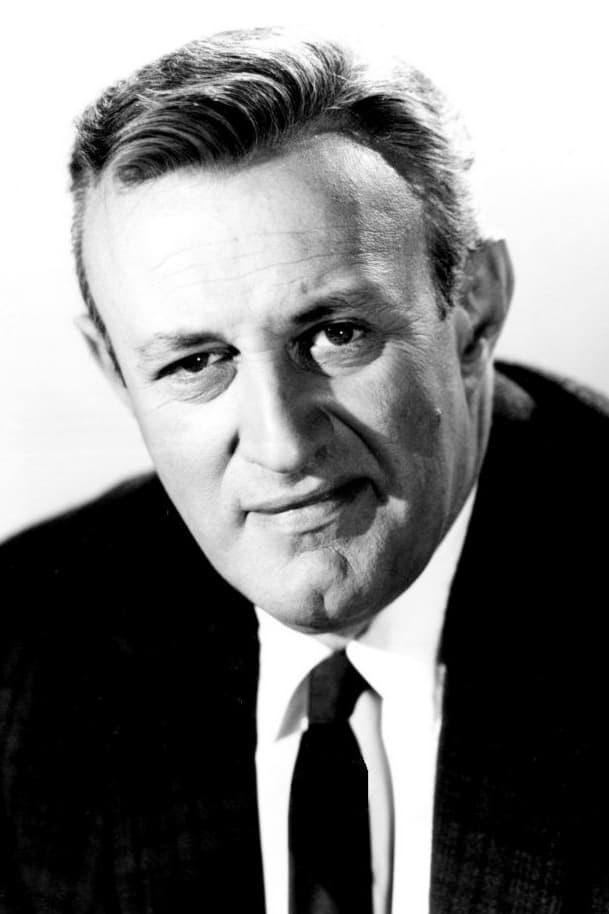
Reginald Rose’s screenplay is a marvel of economy and psychological depth. Each juror, though largely nameless, is meticulously etched through dialogue and reaction, revealing their biases, their fears, and their inherent humanity – or lack thereof. Lee J. Cobb’s Juror 3, a visceral embodiment of personal grievance projected onto the accused, delivers a performance of volcanic intensity, while Henry Fonda’s Juror 8, the lone dissenter, stands as a quiet but unyielding pillar of reason. The interplay between these archetypes is what elevates the film beyond a simple procedural; it becomes a microcosm of societal conflict.
If there’s a minor quibble, it’s that the eventual resolution, while satisfying, occasionally feels a touch too neat, too perfectly aligned with the triumph of rational thought over ingrained prejudice. A cynical viewer might argue that the film, in its desire for a clear moral victory, slightly underplays the enduring stubbornness of human bias. However, this is a minor flaw in an otherwise near-perfect cinematic experience. *12 Angry Men* is essential viewing, a stark reminder that true justice often hinges not on grand revelations, but on the painstaking, often uncomfortable, process of human deliberation. It’s a film that demands reflection, proving that the most profound dramas can unfold within the tightest confines.