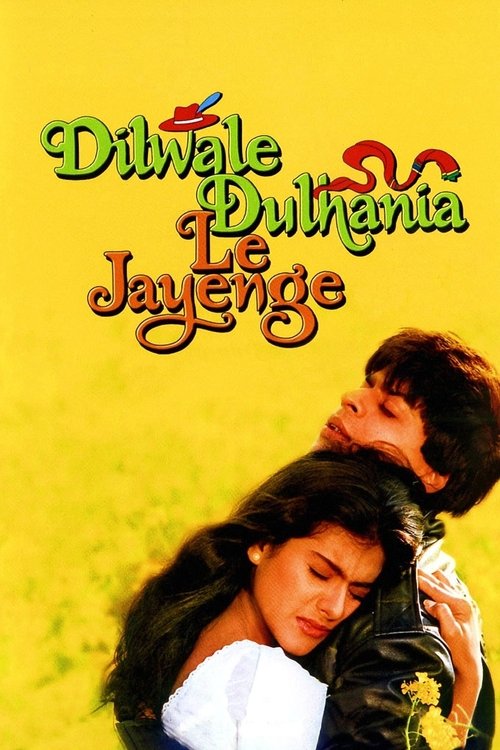
Dilwale Dulhania Le Jayenge
Raj is a rich, carefree, happy-go-lucky second generation NRI. Simran is the daughter of Chaudhary Baldev Singh, who in spite of being an NRI is very strict about adherence to Indian values. Simran has left for India to be married to her childhood fiancé. Raj leaves for India with a mission at his hands, to claim his lady love under the noses of her whole family. Thus begins a saga.




Where to watch


DORAMAQUEST.COM Review
To discuss *Dilwale Dulhania Le Jayenge* is to acknowledge a cinematic phenomenon, a romantic epic that has, for better or worse, defined a generation's understanding of Indian romance. Aditya Chopra's 1995 directorial debut, clocking in at a formidable 190 minutes, is not merely a film; it is a cultural touchstone, a meticulously crafted fantasy that navigates the intricate dance between tradition and modernity.
Chopra’s direction, particularly in the film’s first half, is a masterclass in establishing character through vibrant European backdrops. Raj (Shah Rukh Khan) and Simran (Kajol) are introduced with a youthful exuberance that feels both aspirational and deeply relatable. The cinematography, though perhaps not groundbreaking by today's standards, perfectly captures the picturesque landscapes, creating an almost dreamlike quality that underscores the blossoming romance. It's a testament to the film's enduring appeal that these early sequences, full of playful banter and stolen glances, still resonate.
However, where the film truly anchors itself is in the performances. Shah Rukh Khan, as the irreverent yet ultimately honorable Raj, delivers a performance that cemented his status as the king of romance. His charm is undeniable, his comedic timing impeccable, yet beneath the surface, he conveys a genuine earnestness. Kajol, as Simran, is equally compelling. Her portrayal of a young woman caught between filial duty and personal desire is nuanced, allowing the audience to feel her internal conflict acutely. Amrish Puri, as the formidable Chaudhary Baldev Singh, provides the necessary gravitas, embodying the patriarchal values that Raj must subtly dismantle. His transformation, however gradual, is pivotal and well-earned.
Yet, for all its strengths, *DDLJ* is not without its narrative concessions. The film's second half, while emotionally resonant, occasionally leans into a predictable formula, relying on tropes of familial resistance and self-sacrifice that, while audience-pleasing, can feel a touch prolonged. The central conflict, while powerful, sometimes feels stretched thin across the extensive runtime, leading to moments where the narrative momentum falters. The insistence on winning over the father "fairly" becomes a noble, albeit somewhat contrived, device to extend the drama.
Ultimately, *Dilwale Dulhania Le Jayenge* is a film that understands its audience implicitly. It’s a beautifully shot, wonderfully acted exploration of love, family, and cultural identity. While its narrative might occasionally prioritize sentiment over tight plotting, its emotional core remains undeniably potent. It’s a film that, despite its length and occasional narrative convenience, continues to capture hearts, proving that true artistry lies not just in technical perfection, but in the ability to craft a story that resonates deeply within the human experience.